Recycling and Sustainability at Gardening Millbank
Gardening Millbank is committed to creating an eco-friendly waste disposal area and a sustainable rubbish gardening area that supports local biodiversity, reduces landfill and sets a practical example for neighbourhoods across the borough. Our approach to recycling and sustainability blends practical site design, community partnerships and a clear performance target so the site becomes a demonstrable model of sustainable gardening waste management.Our targets and priorities
We have set a clear recycling percentage target: to reach a 70% recycling and reuse rate for all site-generated waste by 2030. This target covers green waste, timber, compostable material, plastics and reusable garden fixtures. To achieve this we combine segregation at source with on-site processing, regular monitoring, and low-carbon logistics. Our aim is to make the eco-friendly waste disposal area at Millbank both efficient and replicable across similar urban green spaces.
How the borough's system shapes our sorting
Gardening Millbank works within the local borough's approach to waste separation: household and green waste collections are typically split into dry recycling (paper, cans, plastics), garden/green waste and food/organic streams. We mirror that system on-site, using colour-coded skips and compost bays to match the borough's blue, green and brown collection routes. This alignment reduces cross-contamination, improves material quality for processors and helps residents understand the local sustainable gardening waste disposal routine.Local transfer stations and collection hubs
To keep the eco-friendly waste disposal area connected to the wider material recovery network, Gardening Millbank works with several nearby transfer stations and civic collection hubs. Key partners we coordinate with include:- Local transfer stations that accept garden waste, wood and bulky items for onward processing
- City recycling hubs for segregated dry recyclables and plastics
- Community composting sites and municipal anaerobic digestion facilities for food and organic streams
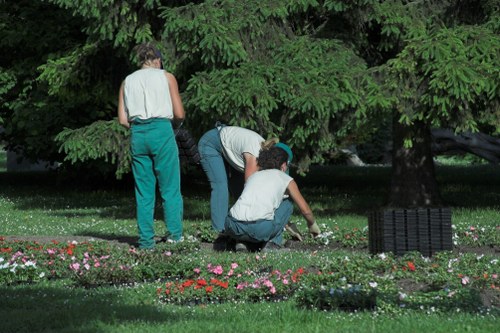 Partnerships with charities and reuse organisations are central to our sustainable rubbish gardening area. We donate usable planters, tools and surplus soil to local charities and social enterprises that refurbish, repurpose and redistribute items to community gardens and low-income households. Formal collaborations with reuse charities mean higher-value items avoid the waste stream and get a second life. We also work with volunteer groups that run seed exchanges and native planting projects, reinforcing circular use of materials across the neighbourhood.
Practical recycling activities on site reflect borough-level practices while addressing gardening-specific waste streams. These include:
- Segregated timber collection for chipping and reuse as mulch
- Separate food/vegetable waste collection for composting
- Designated containers for plastics and metals from planters and garden fittings
Design features of our sustainable rubbish gardening area include on-site compost bays, sheltered storage for reusable materials, clear signage matching borough bin colours and a materials exchange corner for neighbours to swap usable garden goods. These elements help create an efficient sustainable waste hub that keeps organic matter circulating back into soil, rather than becoming refuse. We also prioritise permeable surfaces and water capture systems so waste processing does not harm local drainage or habitats.
Low-carbon transport and logistics
Our collection fleet is being modernised to low-emission vehicles to reduce the carbon footprint of waste movements. Gardening Millbank operates a combination of electric vans and plug-in hybrid vehicles for short local trips, supported by route optimisation to minimise mileage. The fleet plan targets complete transition to zero or ultra-low emission vehicles for site collections and charity deliveries by 2030, helping ensure that the benefits of on-site recycling are not offset by high transport emissions.
Commitment, monitoring and community role
We monitor progress against the 70% recycling rate target through regular audits, waste tonnage tracking and collaboration with borough recycling teams. Community involvement is essential: we host seasonal collection days for larger items, coordinate with local schools and residents' groups for composting education, and publish clear signage so volunteers and visitors can follow the same separation rules as municipal services. Consistent separation at the point of generation remains the most effective way to boost recycling performance in urban green spaces.Gardening Millbank's commitment to sustainable gardening waste management is pragmatic and measurable. By aligning with borough waste streams, partnering with transfer stations and charities, converting to low-carbon vans, and prioritising on-site reuse and composting, we create an effective model for an eco-friendly waste disposal area that others can emulate. Together, these actions deliver environmental benefits, reduce disposal costs and keep valuable garden resources circulating in the community rather than being lost to landfill.